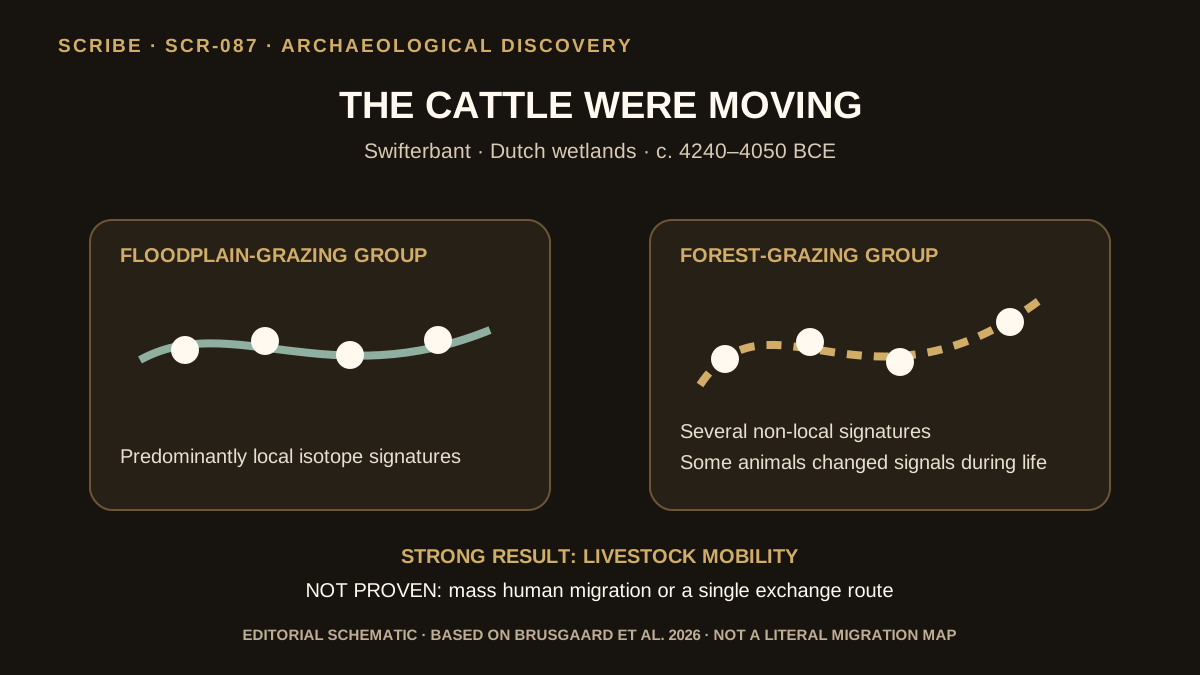
SCR-087 · Archaeological Discovery
A new 2026 isotope study shows that several livestock animals at Early Neolithic Swifterbant in the Netherlands were non-local and that some moved between different environments during life. The pattern is especially associated with a forest-grazing dietary group, while floodplain-grazing animals were mostly local. This provides the first evidence of livestock mobility in northern Europe during the fifth millennium BCE and supports wider interaction networks—but it does not by itself prove large-scale human migration or identify the exact route by which each animal moved.
Read investigation →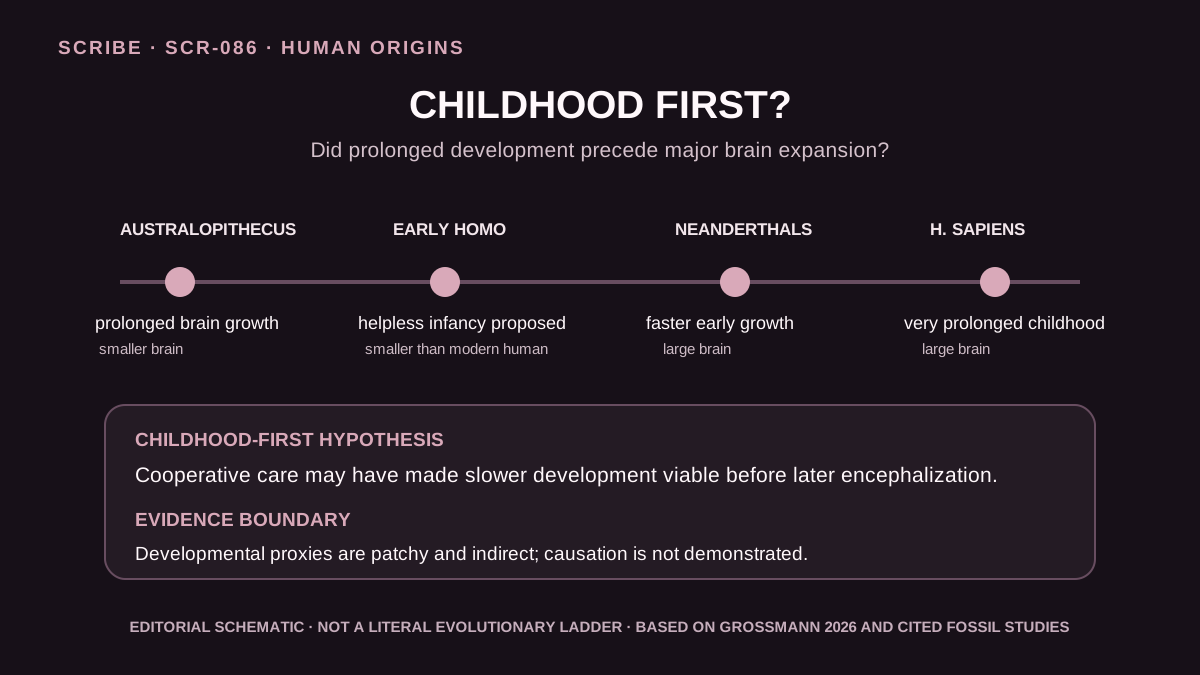
SCR-086 · Human Origins
A new 2026 review argues that prolonged childhood may have begun before major human brain expansion. Fossil evidence from Australopithecus, Homo erectus and Homo floresiensis is consistent with slower or highly dependent early development in relatively small-brained hominins, while Amud 7 suggests faster early Neanderthal growth despite a large brain. The review proposes that cooperative childcare may have helped make prolonged development viable before later encephalization, but the causal sequence remains a hypothesis rather than a settled result.
Read investigation →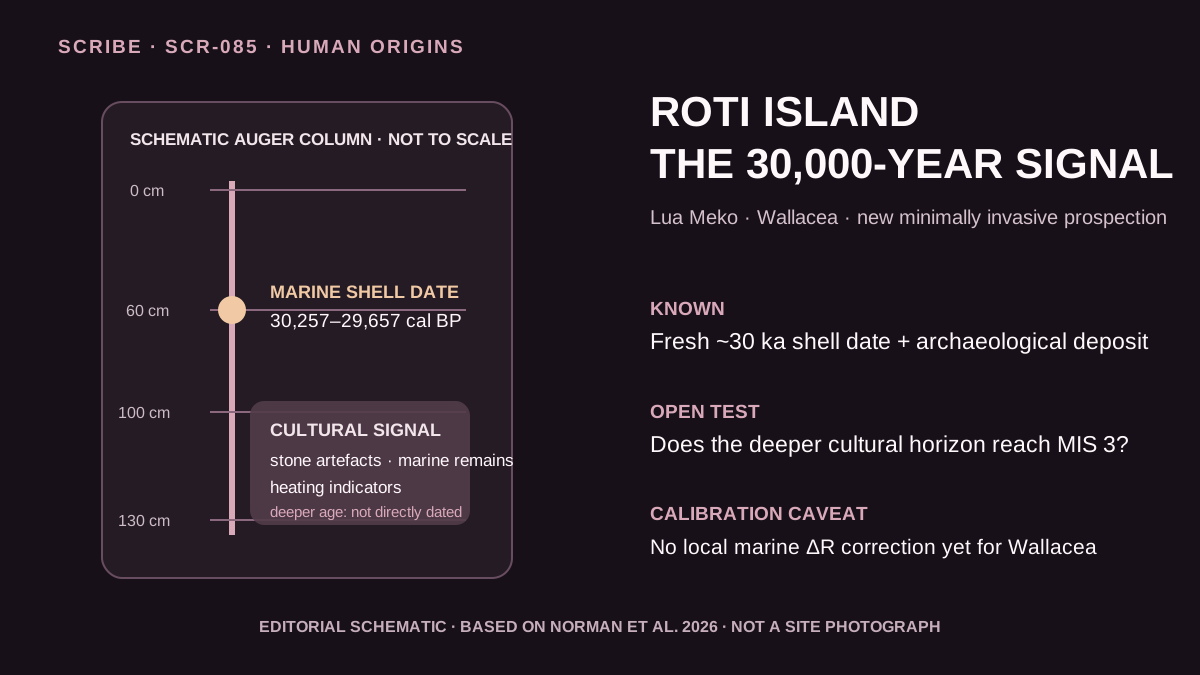
SCR-085 · Human Origins
The new study strengthens evidence that people were using Lua Meko on Roti Island around 30,000 years ago. A marine-shell sample dates to 30,257–29,657 cal BP, while cultural material extends deeper in the deposit. Those deeper deposits may preserve an older record, but they have not yet been directly dated into Marine Isotope Stage 3. The paper also notes that local marine ΔR correction data are unavailable for Wallacea, adding uncertainty to the exact calendar placement of shell dates.
Read investigation →
SCR-084 · Space & Cosmos
Hubble has observed a real 10-sided atmospheric wave encircling Saturn’s south pole. The decagon is embedded in a jet stream, appears across multiple atmospheric layers and became increasingly distinct after subtle signs in 2023. It is not a solid geometric feature of Saturn. Its exact dynamics and long-term stability remain open questions for continued monitoring.
Read investigation →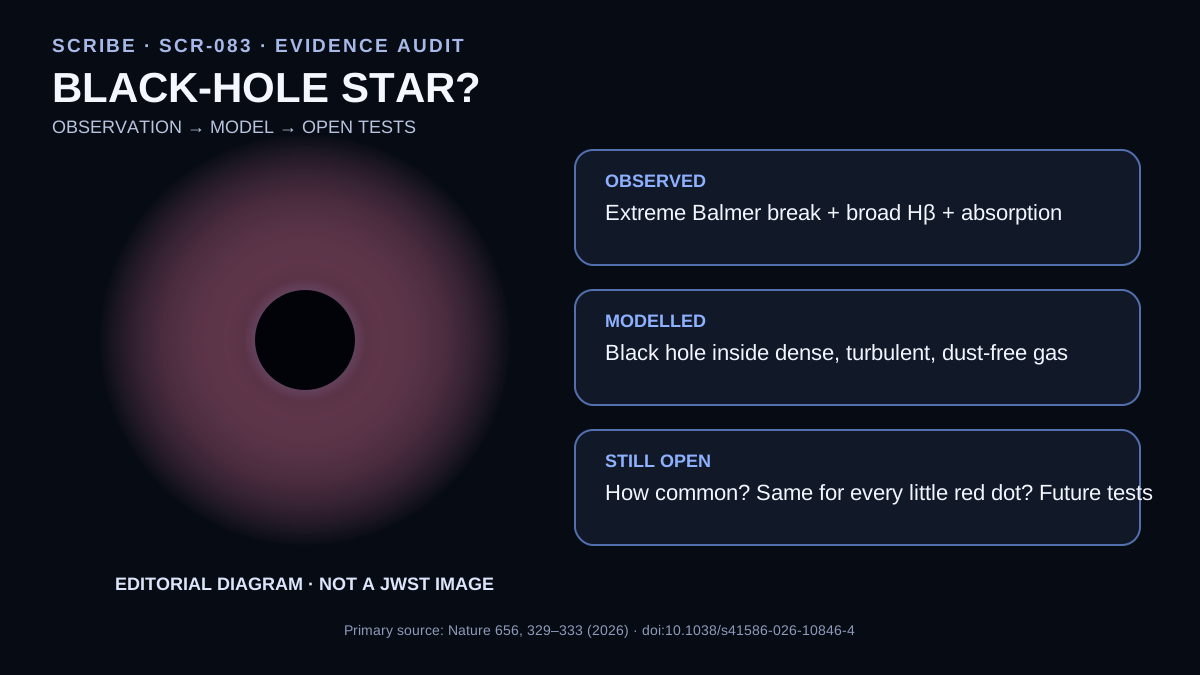
SCR-083 · Space & Cosmos
JWST has measured a remarkable cosmic-dawn source whose spectrum is well modelled as an accreting supermassive black hole buried in extremely dense, turbulent, dust-free gas. The Nature paper supports an enshrouded-black-hole interpretation and links it to rapid early black-hole growth. It does not by itself confirm a new universal class called ‘black hole stars’, prove that all little red dots share one physical nature, or close the alternative-observation tests still being pursued.
Read investigation →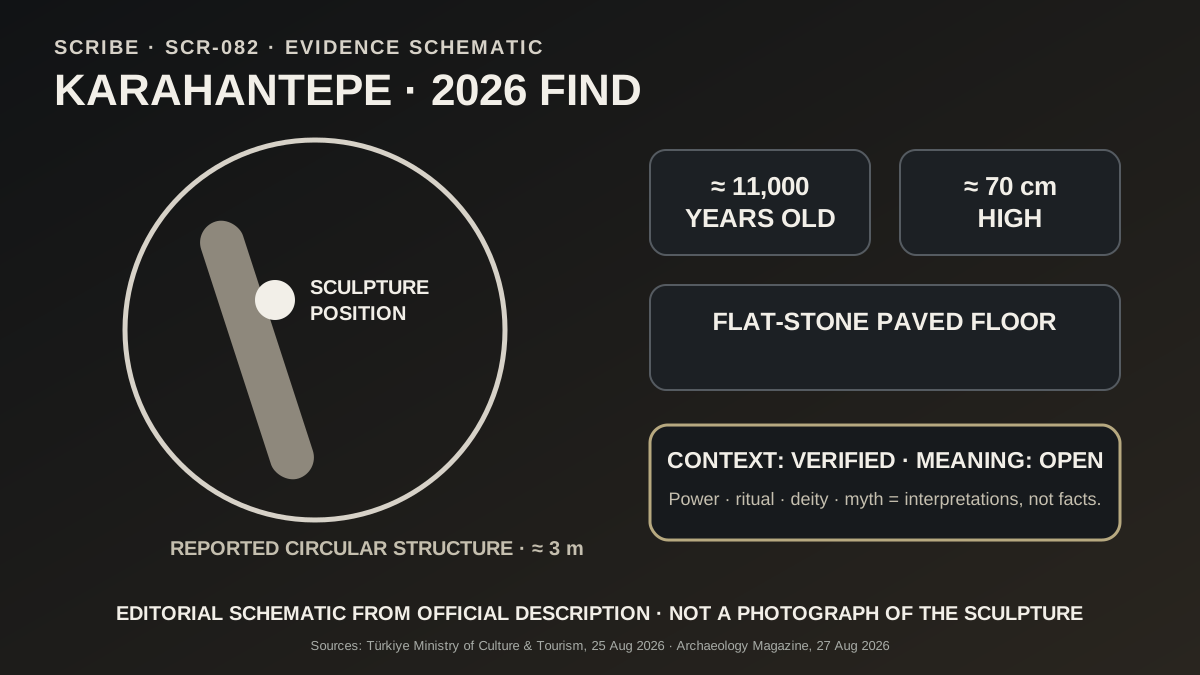
SCR-082 · Ancient Worlds
Karahantepe’s newly announced human-on-leopard sculpture is a real, unusually well-contextualised Neolithic find: approximately 11,000 years old, about 70 centimetres high, and reported in situ on a bench inside a roughly three-metre circular structure with a flat-stone floor. That context can support serious archaeological testing. It does not yet establish whether the image represented power, masculinity, a ruler, deity, shaman, ritual authority, domination over nature or a named myth.
Read investigation →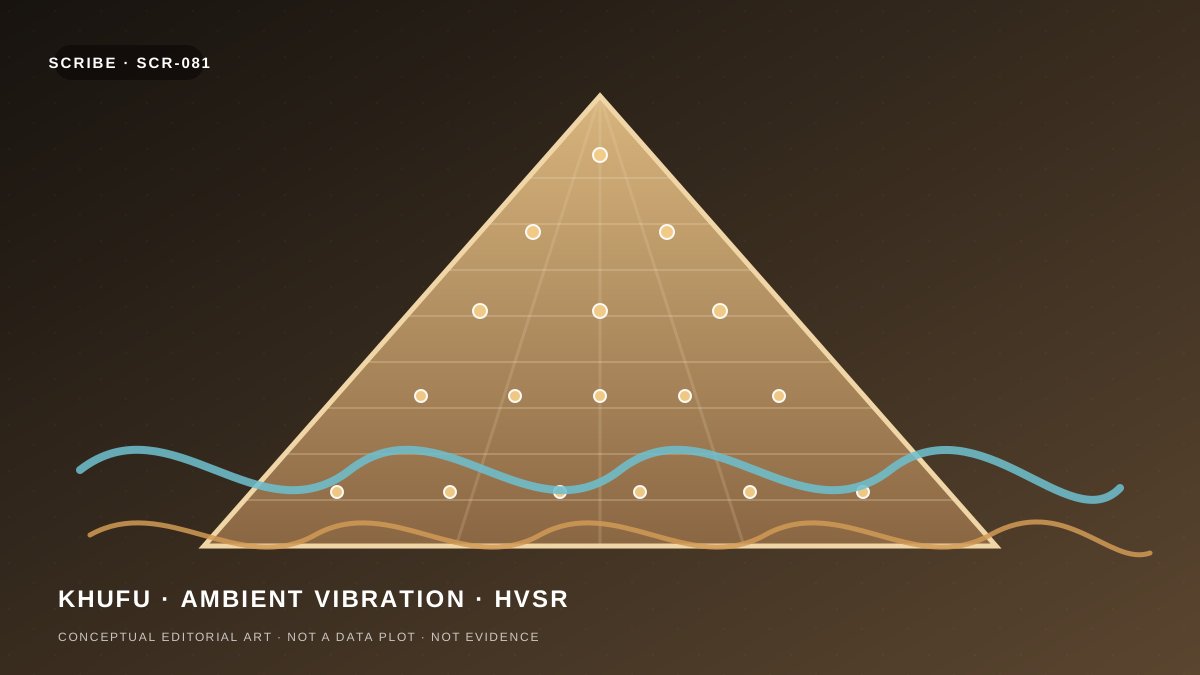
SCR-081 · Ancient Worlds
The 2026 survey found a repeatable dominant HVSR pattern across much of Khufu’s pyramid, centred near 2.3 Hz, distinct from nearby ground at about 0.6 Hz. It also measured a lower relative ratio in the upper relieving chambers than the maximum observed around King’s Chamber level. These results are compatible with structural features that reduce some resonance and amplification risks. They do not show the response to a specific earthquake, prove that the whole monument is earthquake-proof, or establish that Old Kingdom builders intentionally optimised it for seismic performance.
Read investigation →
SCR-080 · Earth in Transition
Current USGS, ICIMOD and satellite-based assessments support a major ice-rock/glacial collapse near Langtang Lirung as the trigger for the 26 August 2026 Nepal–Tibet border debris flow and flash flood. USGS says the collapse itself generated seismic energy equivalent to about a magnitude-5.2 earthquake and the flow travelled roughly 100 kilometres. The exact failure mechanism and the role of climate change in this specific event remain under investigation.
Read investigation →
SCR-079 · Archaeological Discovery
A peer-reviewed 2026 archaeogenomic study reports highly fragmented ancient Theobroma cacao DNA in two residue samples associated with 11th–12th century Etowah pottery and feasting contexts. Together with earlier residue chemistry, the result strongly supports cacao presence and consumption at Etowah. It does not identify the cacao's source or prove direct Maya, Mexican or Southwestern contact.
Read investigation →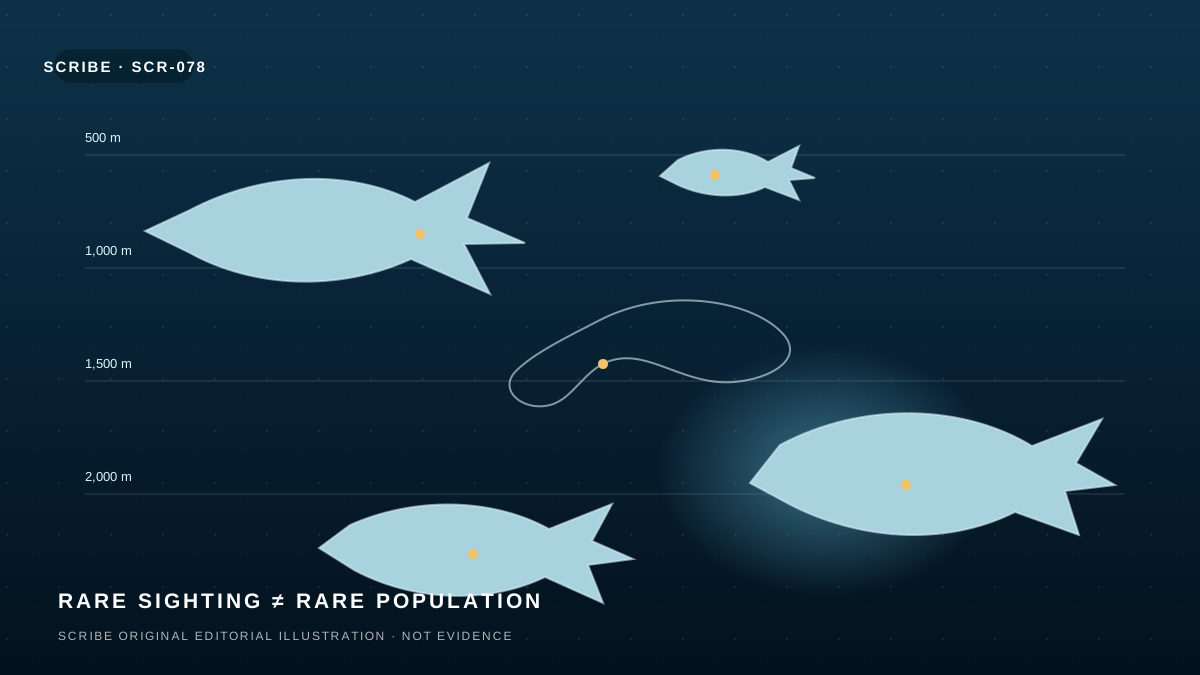
SCR-078 · Oceans & Submerged Worlds
Rare deep-water sharks show that scientific visibility and biological abundance are not the same thing. The 2026 goblin-shark observations, the one-specimen American pocket shark description, the five-specimen southern African frilled-shark description and individually catalogued megamouth encounters all expose how thin deep-ocean sampling can be. The evidence supports more systematic cameras, genetics and repeated survey effort—not claims that any specific prehistoric giant has survived unseen.
Read investigation →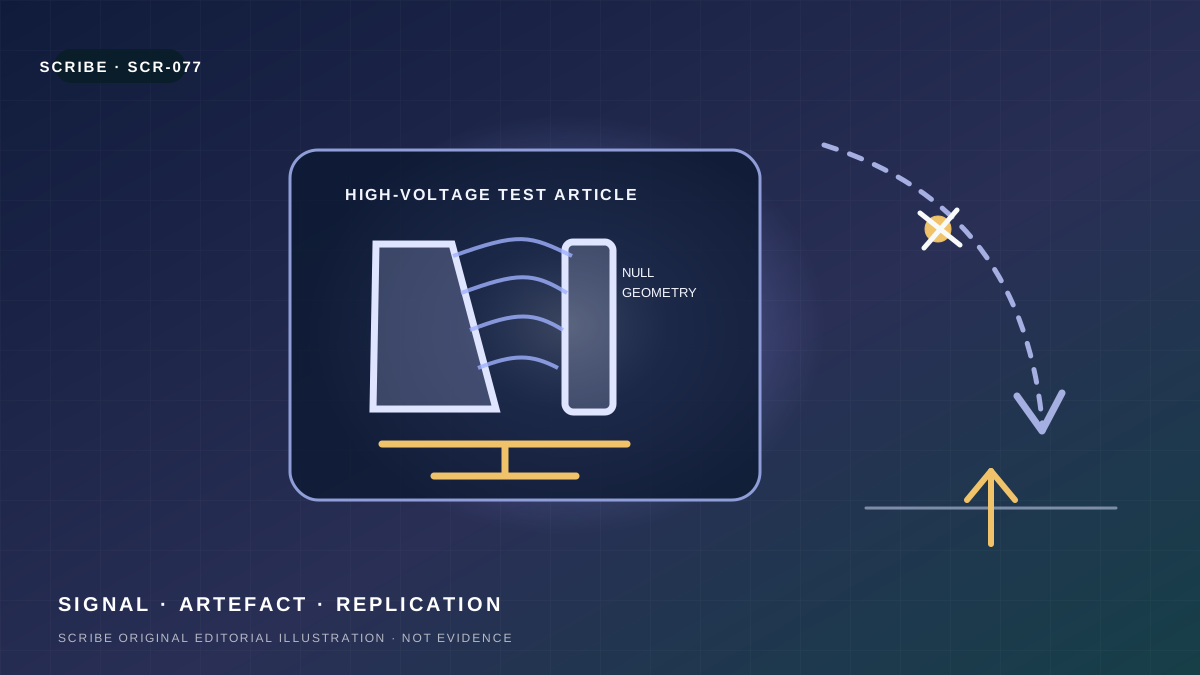
SCR-077 · Space & Cosmos
Exodus may be measuring a repeatable force, but the public evidence does not yet establish propellantless thrust. The decisive gap is independent, self-contained replication with a complete uncertainty budget. Conventional measurement artefacts or momentum exchange with the test environment remain more plausible than a new fundamental force. If the effect were confirmed, even modest continuous thrust without propellant could transform satellite lifetime and deep-space delta-v; current results do not establish a flight-ready drive, Earth lift-off or rapid interplanetary travel.
Read investigation →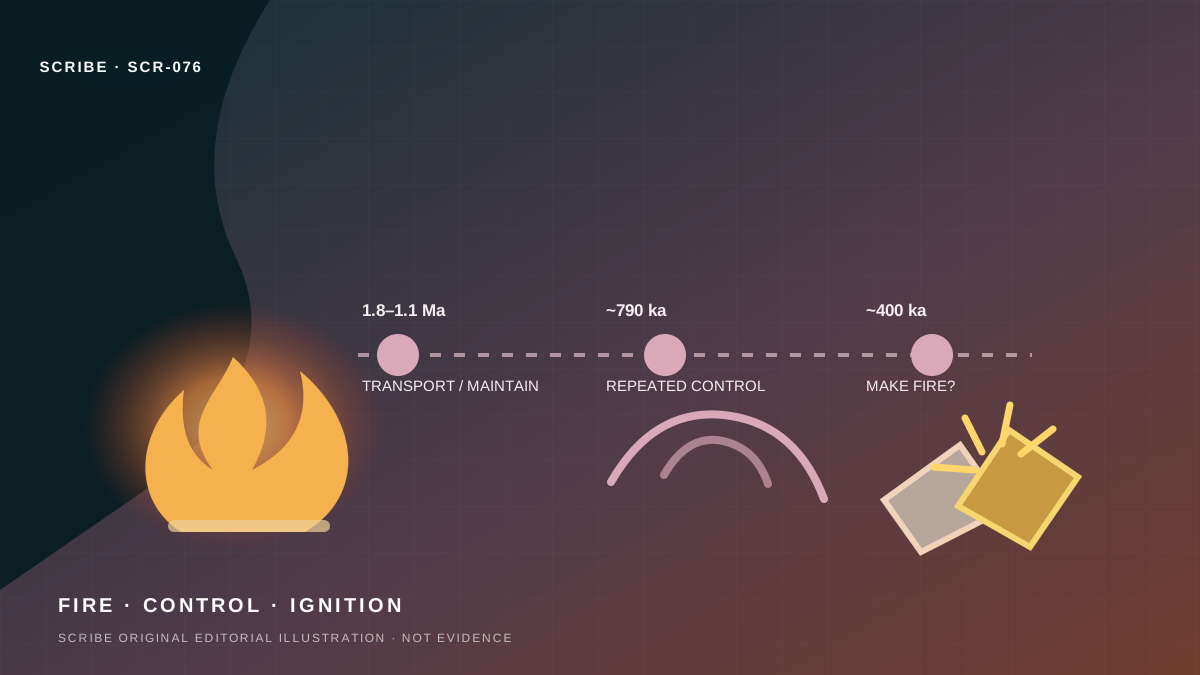
SCR-076 · Human Origins
Hominins were probably transporting and managing naturally acquired fire at Wonderwerk Cave between about 1.79 and 1.07 million years ago, with especially strong in-situ evidence by roughly one million years ago. Repeated control is well supported at Gesher Benot Ya‘aqov by about 790,000 years ago. The earliest current evidence specifically for making fire is Barnham at about 400,000 years ago. No single date captures the whole transition.
Read investigation →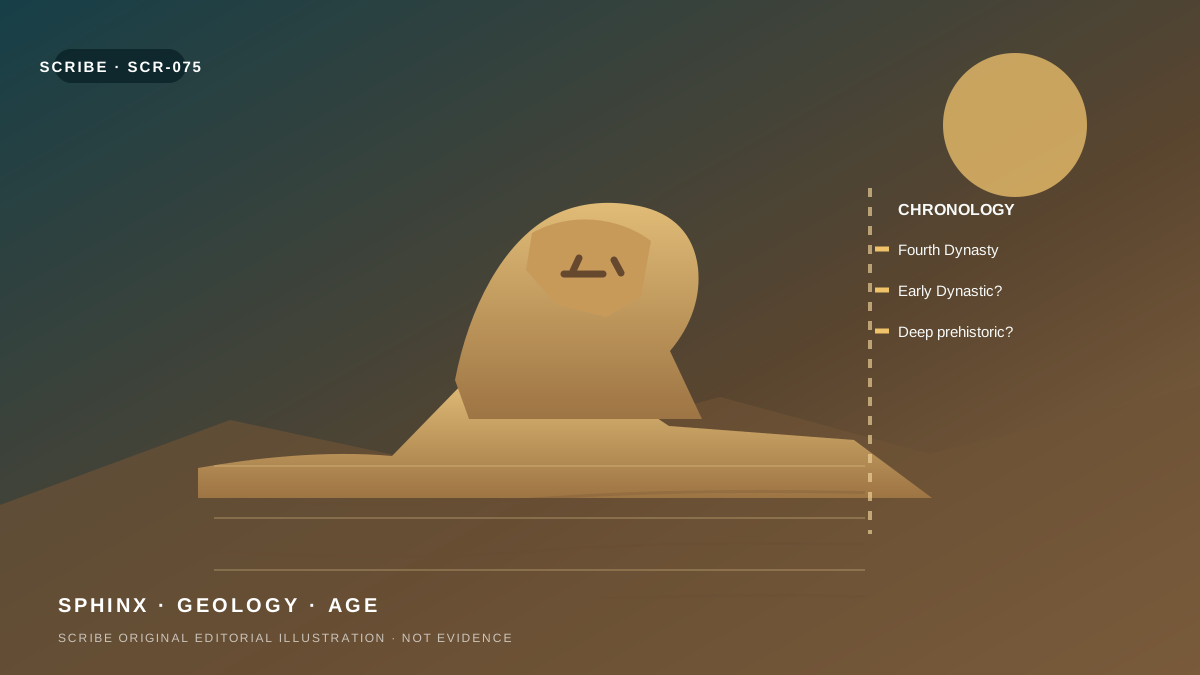
SCR-075 · Ancient Worlds
The Great Sphinx is best placed within the Fourth-Dynasty Giza building programme, with Khafre still the most probable patron, but its exact builder and start date are not fixed by a contemporary inscription. Geology can constrain sequence and erosion history; it does not currently provide an uncontested absolute carving date. Colin Reader's current work makes a pre-Khufu or Early Dynastic phase a serious alternative worth testing. No reviewed evidence demonstrates a 7000 BCE, Younger Dryas-age or other deep-prehistoric Sphinx.
Read investigation →
SCR-074 · Space & Cosmos
Yes. The Milky Way can influence whether a world remains habitable through stellar radiation, supernova exposure, close stellar encounters and the chemical history that formed the system. But current evidence suggests the planet’s own atmosphere and its host star are more immediate constraints than a simple ‘safe region of the Galaxy’ label. We already know dozens of rocky habitable-zone worlds worth testing; none is yet known to host life.
Read investigation →
SCR-073 · Earth in Transition
Cosmic rays can affect aerosol nucleation and may assist particle survival towards cloud-condensation-nucleus sizes. That mechanism is experimentally real. What has not been demonstrated is that ordinary solar-driven cosmic-ray changes produce a large global cloud response or dominate recent climate change.
Read investigation →